
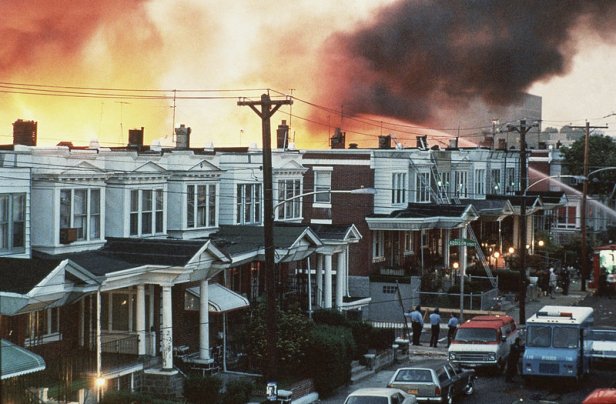
A look back at the 1985 MOVE bombing in Philadelphia, where a police assault killed 11 people and destroyed dozens of homes, raising ongoing questions about justice and accountability.
Introduction
On May 13, 1985, a devastating event unfolded in Philadelphia when police dropped an explosive device on a residential home, leading to a fire that killed 11 people—including five children—and destroyed 61 houses. Decades later, the incident remains one of the most controversial and tragic examples of state violence in modern U.S. history.
Background: Tensions with MOVE
The bombing targeted members of MOVE, a group founded in 1972 that promoted a back-to-nature philosophy and criticized social and political institutions. For years, the organization had been in conflict with local authorities, facing surveillance, harassment, and previous confrontations.
An earlier clash in 1978 escalated tensions significantly. During that incident, a large police operation surrounded a MOVE residence, resulting in violence, arrests, and long prison sentences for several members.
Escalation Leading to 1985
After relocating to a home on Osage Avenue, MOVE members continued to face close monitoring. Over time, tensions between the group and city officials intensified.
Authorities developed plans to remove MOVE from the neighborhood, including preparing for a large-scale operation. In the days leading up to May 13, residents were evacuated, and the area was heavily secured by police.
The Assault on Osage Avenue
Early in the morning on May 13, police launched a coordinated operation against the MOVE house. The assault included tear gas, water cannons, and heavy gunfire.
After hours of confrontation, authorities made the decision to drop an explosive device from a helicopter onto the roof of the building. The explosion ignited a fire that quickly spread.
Rather than immediately extinguishing the flames, officials allowed the fire to burn, resulting in widespread destruction across the neighborhood.


Casualties and Destruction
The consequences were catastrophic:
- 11 people killed, including 5 children
- Dozens of homes destroyed
- Entire blocks of a working-class neighborhood left in ruins
Only two individuals inside the house survived the incident.
Aftermath and Controversy
In the years following the bombing, investigations raised serious concerns about the decisions made by city officials and law enforcement. Despite the scale of the tragedy, no officials were criminally charged.
The event sparked national and international criticism, with many questioning the use of such extreme force in a residential area.
Ongoing Debate Over Accountability
Calls for accountability and justice have continued for decades. Activists and community members argue that the victims and their families deserve acknowledgment, reparations, and a full reckoning of what occurred.
While some former officials have expressed regret, debates persist over whether meaningful accountability has ever been achieved.
A Lasting Impact
The MOVE bombing remains a powerful symbol of the consequences of unchecked state power. It continues to influence discussions around policing, civil rights, and government responsibility.
For many, the event is not just history—it is a reminder of the importance of transparency, justice, and the protection of communities.
Conclusion
More than three decades later, the 1985 MOVE bombing stands as a deeply painful moment in Philadelphia’s history. As calls for reflection and accountability continue, the tragedy serves as a reminder of the need to confront the past while striving for a more just future.
Leave a Reply
You must be logged in to post a comment.