
Opposition to Russia’s invasion of Ukraine does not automatically translate into support for Western military expansion. Many critics firmly reject the invasion and support Ukraine’s right to self-defense, while also opposing the role of NATO. They argue that understanding NATO’s history and function is essential to evaluating its role in global politics.
NATO was established in 1949 as a military alliance between Western countries, including the United States, Canada, and several European nations. It emerged in the aftermath of World War II, officially to ensure collective defense against potential threats. Its core principle, outlined in Article 5, states that an attack on one member is considered an attack on all.
During the Cold War, NATO positioned itself against the Soviet Union, which responded by forming the Warsaw Pact. Although NATO presented itself as a defensive alliance, critics argue that it was deeply tied to U.S. geopolitical and economic interests, particularly through the expansion of military infrastructure and technological superiority.
After the collapse of the Soviet Union in 1991, the Warsaw Pact dissolved, but NATO did not. Instead, it expanded significantly, adding numerous Eastern European countries. Critics see this expansion as a key factor in rising tensions with Russia, especially as NATO increased its presence near Russian borders and engaged with countries like Ukraine.
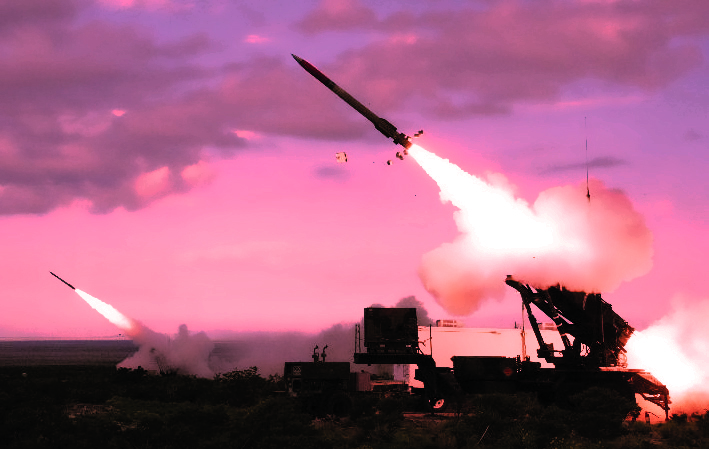
A major point of criticism is the scale of U.S. military power within NATO. The United States maintains hundreds of military bases worldwide and deploys troops across allied nations. Many of these bases are located in NATO countries, reinforcing Washington’s influence over European security policies. Rather than promoting peace, critics argue that this network enables military intervention, political pressure, and economic leverage.
Beyond military concerns, NATO is also viewed as supporting broader economic interests. Analysts point to the influence of sectors such as defense manufacturing, energy, and finance. Companies tied to the so-called “military-industrial complex” benefit directly from increased arms spending among NATO members. Rising tensions often lead to higher defense budgets, which in turn generate profits for major corporations.
Energy politics also play a role. Efforts to limit Europe’s reliance on Russian resources, for example, have aligned with U.S. economic interests. Critics argue that NATO’s policies can reinforce global economic systems that prioritize profit and strategic control over cooperation and stability.
Another concern is the promotion of austerity and privatization policies through institutions linked to Western alliances. Some argue that military partnerships often go hand in hand with economic conditions that reshape national policies in favor of global capital.
Despite these criticisms, opponents of NATO expansion do not necessarily support rival powers like Russia or China. Instead, they view the current global order as a conflict between competing powers, where ordinary people—especially workers—bear the greatest costs.
From this perspective, dismantling NATO is seen not as weakening security, but as challenging a system that perpetuates militarization and inequality. Advocates of this view call for international solidarity among working people, independent of major powers, as the only sustainable path toward peace.
In the end, the debate over NATO is not simply about one alliance, but about the broader question of how global security should be organized—and whose interests it ultimately serves.
Leave a Reply
You must be logged in to post a comment.