
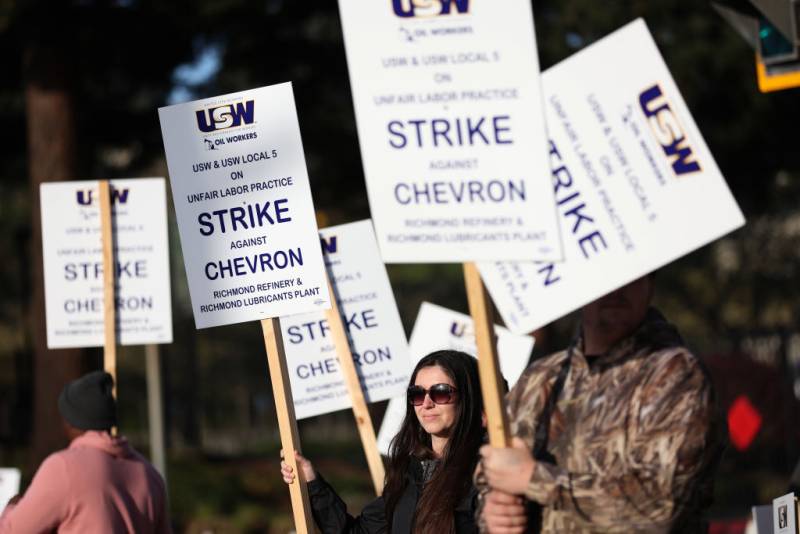
Oil workers at Chevron’s Richmond refinery launch a strike over wages, working conditions, and labor rights, highlighting growing tensions in the U.S. energy sector.
Introduction
More than 500 oil refinery workers at Chevron’s Richmond facility in California have launched a strike, demanding better wages, improved working conditions, and fair labor practices. The action comes amid rising living costs and growing dissatisfaction with recent labor agreements in the U.S. oil and chemical industry.
Background of the Strike
The strike follows a national pattern bargaining agreement negotiated by the United Steelworkers (USW), covering approximately 30,000 workers across refineries and chemical plants in the United States. However, members of USW Local 5 in Richmond rejected the proposed agreement, arguing that it failed to address their core concerns.
As a result, workers voted to strike after their contract expired on February 1, marking a rare labor action at the Richmond facility.
Key Issues Behind the Protest
Workers at the Chevron refinery cite several major concerns driving the strike:
- Wages not keeping up with inflation
The proposed 2.5% wage increase falls short compared to rising inflation, which significantly impacts the cost of living in the Bay Area. - Rising healthcare costs
Employees report that increased medical expenses would effectively cancel out any wage gains. - Demanding work schedules
Long 12-hour shifts and pressure to work on scheduled days off remain a major issue. - Workplace safety concerns
Workers were required to continue working during the peak of the COVID-19 pandemic, raising serious health risks. - Staff shortages
Employees emphasize the need for more hiring to reduce workload and improve safety conditions.
Life on the Picket Line
Striking workers have organized 24-hour picket lines outside the refinery, rotating in six-hour shifts. Despite cold and foggy weather, morale remains strong, with workers showing solidarity, humor, and determination.
Support from the local community has also been visible, as passing drivers frequently honk in encouragement. While there have been minor tensions involving law enforcement and truck drivers attempting to enter the facility, the overall atmosphere remains positive.
To support those affected, the union has established a solidarity fund to help workers cover essential expenses such as housing, healthcare, and food.
Corporate Profits vs Worker Struggles
A key frustration among workers is the contrast between Chevron’s financial performance and employee compensation. The company recently reported billions in profits—its highest since 2014—yet workers argue that these gains are not reflected in their wages.
Some workers also pointed out disparities in management pay, noting that certain executives received significant salary increases while frontline workers struggle with rising living costs.
Labor Dispute and Legal Concerns
The strike has been classified as an Unfair Labor Practice (ULP) strike, with workers accusing Chevron of failing to negotiate in good faith. According to union members, the company has not seriously engaged with their demands.
Additionally, workers claim that management has circulated misleading information, including suggestions that the strike is illegal—further escalating tensions.
A Broader Labor Movement
The Richmond strike is part of a wider resurgence of labor activism across the United States. Workers expressed optimism about growing union activity and increasing strike actions in recent years.
There is also a strong sense of solidarity with other labor groups, including teachers’ unions and workers in similar industries.
Can Replacement Workers Sustain Operations?
Chevron has attempted to maintain operations by assigning engineers and non-union staff to replace striking workers. However, many believe this approach is unsustainable.
Refinery work is highly specialized, requiring years of training and experience. Workers argue that limited safety training is not enough to ensure smooth or safe operations, and they expect the company will eventually return to negotiations.
Conclusion
The Chevron Richmond strike highlights ongoing tensions between corporate profitability and worker welfare. As inflation rises and labor conditions remain challenging, this dispute reflects broader questions about fairness, safety, and the future of labor relations in the energy sector.
Leave a Reply
You must be logged in to post a comment.