In late July, federal authorities carried out coordinated raids targeting members and offices connected to the African People’s Socialist Party (APSP) and affiliated groups. Locations in St. Louis and St. Petersburg, Florida—including spaces linked to the Uhuru Movement—were searched in operations that reportedly involved heavily armed agents, tactical gear, and explosive devices.
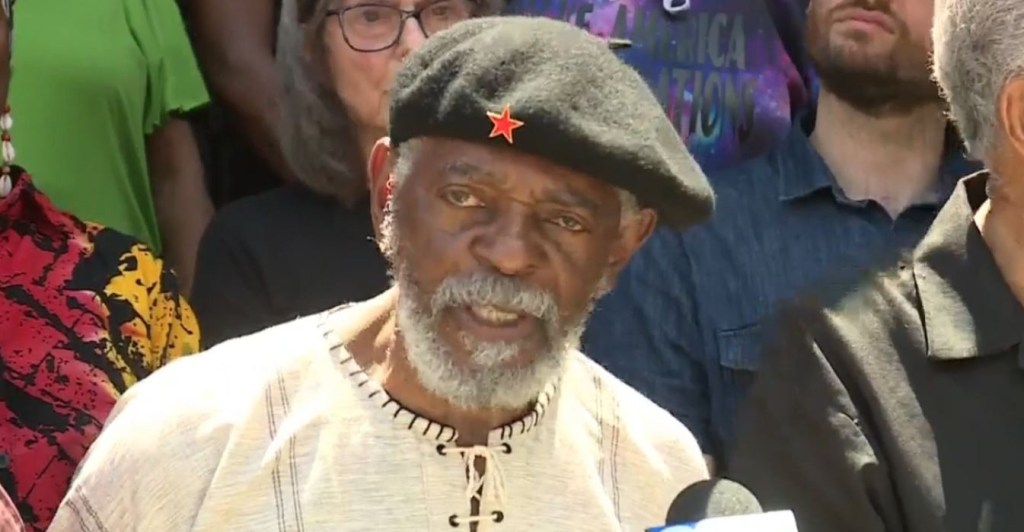
According to APSP chairman Omali Yeshitela, the early-morning raid on his home created fear and confusion. Officers surrounded the area, issued commands over loudspeakers, and deployed flash-bang grenades. Yeshitela later stated that he was not immediately shown a warrant and believed the situation could have escalated into deadly violence.
Federal investigators claim the raids are connected to an indictment involving a Russian national accused of spreading disinformation through ties with activist groups. As part of the operation, authorities seized computers and decades’ worth of organizational records. Yeshitela rejected the allegations, arguing that systemic oppression experienced by Black communities in the United States cannot be attributed to foreign influence.
The incident is part of a broader pattern of increased pressure on activists and social movements. In recent years, authorities at multiple levels have expanded restrictions on protests and political organizing. Following major demonstrations—such as those at Standing Rock protests—new laws have been introduced that critics say make it easier to criminalize dissent, particularly among Indigenous and environmental activists.
Historically, such repression is not new. During the Red Scare after World War I, thousands of socialists, labor organizers, and antiwar activists were arrested or deported. Laws like the Sedition Act made it illegal to criticize the government. Similar patterns appeared during World War II under the Smith Act, when members of the Socialist Workers Party were prosecuted for their political views.
The Cold War era intensified these practices. Under the influence of Joseph McCarthy, widespread investigations led to blacklists, job losses, and prison sentences for suspected radicals. High-profile cases such as Julius Rosenberg and Ethel Rosenberg reflected the extent of political persecution during this time.
Even during the civil rights era, state agencies continued covert operations. The FBI’s COINTELPRO targeted Black liberation movements and leftist organizations, often using infiltration and disruption tactics. Activists such as Fred Hampton and Malcolm X were among those affected by state repression.
More recent examples include raids on antiwar activists in 2010 and expanded surveillance powers under the PATRIOT Act, which broadened government authority to monitor and detain individuals in the name of national security.
Critics argue that such measures are often used to silence dissent rather than protect public safety. They warn that targeting one group can set a precedent for broader crackdowns on civil liberties. The principle that “an injury to one is an injury to all” remains central to many labor and activist movements.
Ultimately, the debate extends beyond any single organization. It raises fundamental questions about free speech, the right to organize, and the limits of state power. Supporters of the targeted groups are calling for solidarity, emphasizing that protecting civil liberties is essential not only for activists, but for society as a whole.
Leave a Reply
You must be logged in to post a comment.